VOC Emission Control Regulations
Global regulatory overview for industrial VOC compliance, abatement and Air Pollution Control
Volatile Organic Compounds (VOCs) are emitted by a wide range of industrial sources. Effective VOC emission control therefore combines an understanding of the applicable regulatory framework with process-specific engineering, measurement, technology selection and lifecycle considerations.
This DEC resource provides a global navigation point for industrial operators, engineers and project teams. It connects the regulatory picture in the European Union, United States, China, India and the Russian Federation with DEC's technical resources for Air Pollution Control (APC), solvent recovery, thermal oxidation and VOC concentration.
Understanding VOCs and industrial emission control
Volatile Organic Compounds represent a broad category of chemical substances released from industrial processes and sources. VOC emissions can contribute to ground-level ozone and photochemical smog, while exposure to some compounds can present health concerns. For industrial facilities, the practical compliance question is how to identify relevant emission sources, determine the applicable requirements and implement an abatement strategy that is technically appropriate for the process.
From emission source to compliance strategy
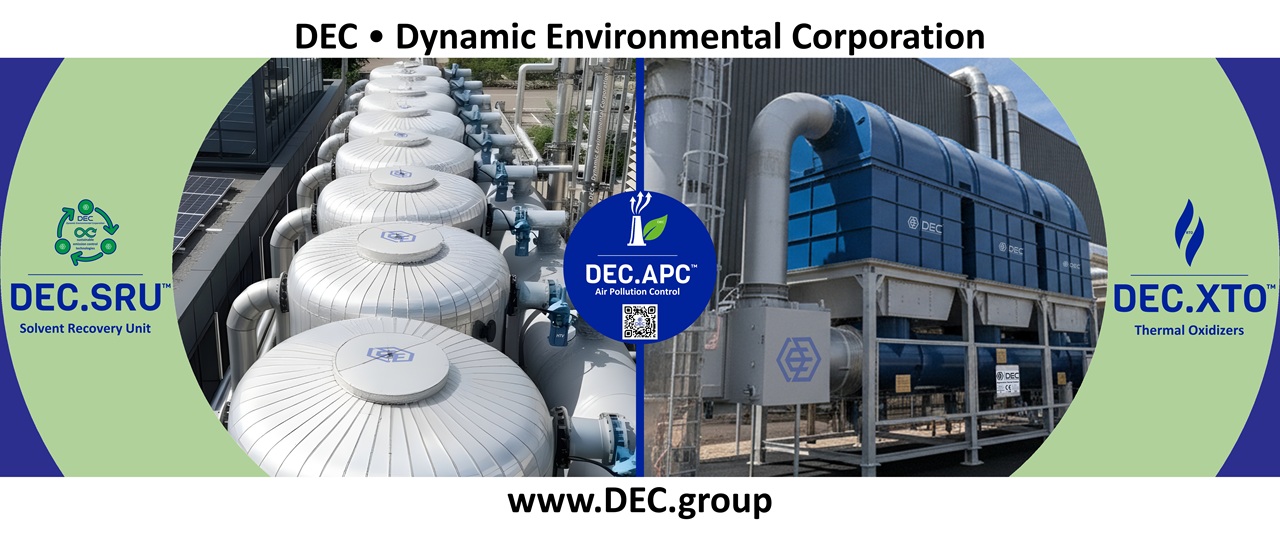
A robust VOC control project should connect the process and emission profile to the applicable regulatory requirements and then to the appropriate control technology. Relevant considerations can include VOC composition, concentration, flow, solvent characteristics, operating conditions, recovery objectives, energy use, available space, CAPEX/OPEX and measurement or reporting requirements.
Regulatory requirements are jurisdiction-specific
VOC requirements are not governed by one universal global threshold. Applicable obligations can differ by country, industry, process, installation, permit and regulatory authority. DEC's jurisdiction-specific pages below are designed to provide a more focused starting point for each major regulatory framework covered by this overview.
VOC emission control regulations by country and region
The regulatory framework for industrial VOC emissions is jurisdiction-specific. The DEC resources below provide a focused starting point for the European Union, United States, China, India and Russian Federation, linking the applicable regulatory context to the engineering assessment of the emission source.
European Union
Industrial Emissions Directive
IED • BAT • BREF
Industrial emissions requirements under the EU framework, including Best Available Techniques and sector-specific BAT Reference Documents.
United States
Clean Air Act
CAA • RACT • CTG • SIP • NAAQS
Federal and state VOC control mechanisms under the Clean Air Act framework, including RACT, Control Technique Guidelines and State Implementation Plans.
China
Ecological Environment Code
Environmental protection • Air emissions
DEC's dedicated China resource covering the ecological and environmental protection framework relevant to industrial environmental compliance.
India
Air & Environmental Protection
Air pollution control • Environmental protection
DEC's India resource addresses the air-pollution and environmental-protection framework relevant to industrial VOC emissions.
Russian Federation
Environmental & Air Protection
Environmental protection • Air emissions
DEC's dedicated resource covering environmental and air-protection requirements relevant to industrial emissions in the Russian Federation.
Regulatory requirements can vary according to industry, process, installation, permit conditions and competent authority. The dedicated DEC pages should be read together with the requirements applicable to the specific facility.
European Union: IED, BAT and BREF
The EU resource focuses on the Industrial Emissions Directive (IED), BAT and BREF framework. For covered installations, BAT conclusions and sector-specific reference material can be important inputs to the assessment of emission-control performance.
United States: Clean Air Act and VOC control mechanisms
The US resource covers the Clean Air Act (CAA) and the related VOC control framework identified in the DEC resource, including RACT, CTGs, SIPs and NAAQS-related context.
China: ecological and environmental protection
DEC's China regulatory resource provides the dedicated starting point for understanding the Ecological Environment Code and its relevance to industrial environmental compliance.
India: air pollution control and environmental protection
The India regulatory resource addresses the air-pollution and environmental-protection framework relevant to industrial VOC emissions.
Russian Federation: environmental and air protection
The Russian regulatory resource provides the dedicated DEC overview for environmental and air-protection requirements relevant to industrial emissions.
Engineering VOC compliance into the abatement system
Regulatory compliance is most effective when it is considered during process and equipment selection rather than treated as a final-stage check. DEC's engineering approach links the emission profile and compliance objectives with the appropriate APC processes, technologies and services.
Technology pathways for VOC control
Solvent recovery
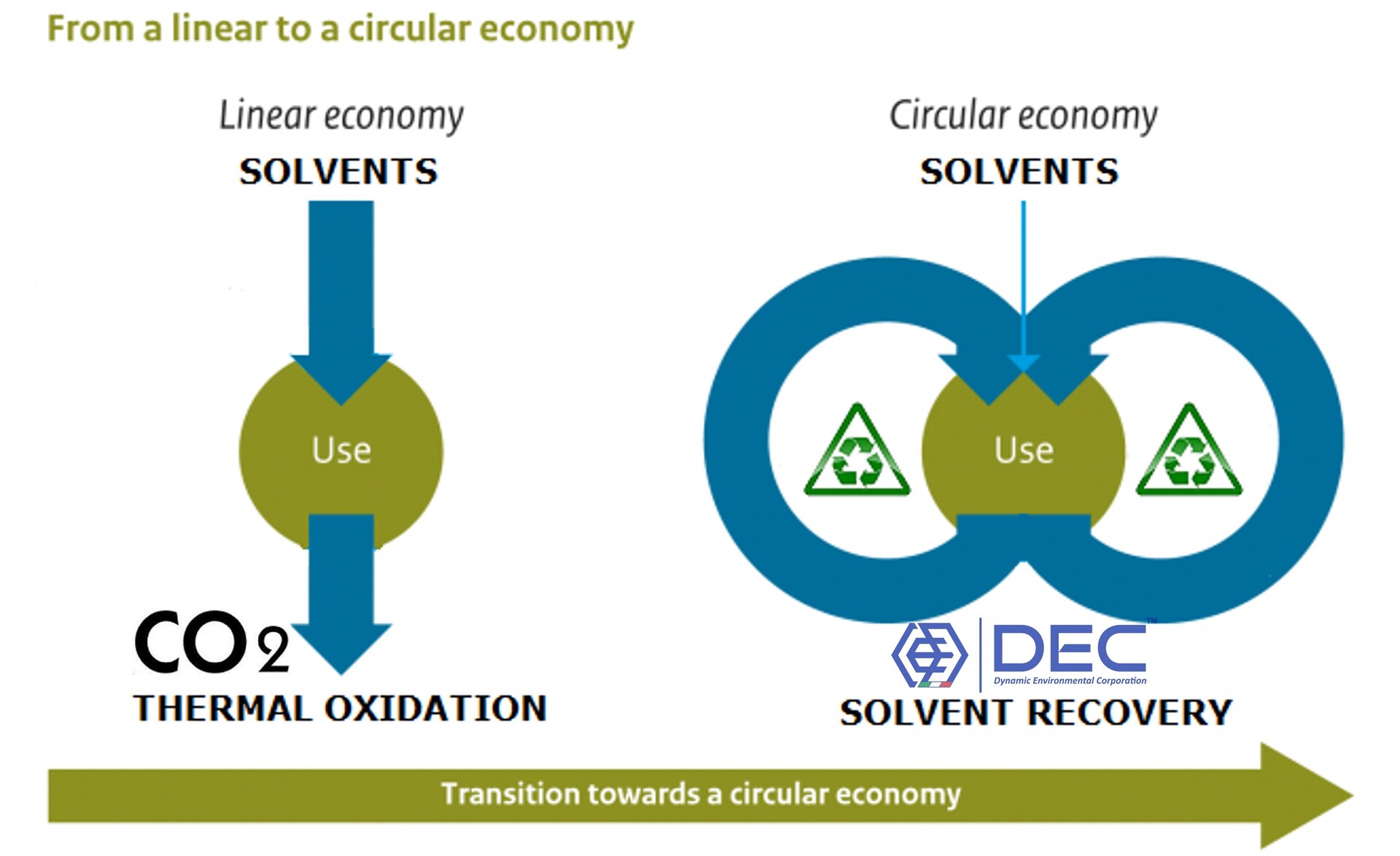
Where solvent recovery is technically and economically appropriate, DEC's SRU™ solvent recovery units can form part of an emission-control and resource-recovery strategy. Supporting resources include the solvent recovery engineering guide.
Thermal oxidation
Thermal oxidation can be evaluated for VOC streams where destruction is the appropriate control objective. DEC's XTO™ thermal oxidizer portfolio includes RTO™ regenerative, DTO™ direct and CTO™ catalytic configurations.
VOC concentration
For suitable dilute exhaust streams, concentration can be considered as part of the overall abatement architecture. DEC's XBC™ concentration systems include static, rotary and fluidized-bed configurations.
Technology selection should consider the complete environmental balance
Selecting an industrial VOC emission-control technology requires more than comparing removal efficiency. The decision should consider the type of VOCs and solvents, emission load, airflow, operating profile, recovery or destruction objective, energy demand, available installation area, CAPEX/OPEX and the applicable regulatory framework. DEC's decarbonization and circular-economy resource provides additional context for evaluating VOC and GHG implications together.
DEC's regulatory-to-engineering approach
DEC combines regulatory navigation with engineering capabilities for industrial Air Pollution Control. The objective is to translate applicable compliance requirements into a technically defensible abatement strategy while considering operational performance, energy efficiency, recovery opportunities, maintainability and lifecycle impact.
Evidence, engineering and project delivery
DEC's references, DEC ENGINEERING and Quality, Safety & Environment resources provide additional corporate and technical context. For environmental management, see also ISO 14001 Environmental Management Systems.
Use the regulatory resource first, then validate the site-specific requirements
Because regulations, permits and enforcement expectations can change, the jurisdiction-specific DEC pages should be treated as a structured technical starting point rather than a substitute for current legislation, permits or advice from the competent authority. Site-specific compliance should always be verified against the requirements applicable to the actual installation.
Related DEC VOC and APC resources
- VOC emission control technologies, case studies, glossary, guidelines and regulations
- Adsorption and desorption concepts glossary
- Sustainable technologies and solutions
- DEC.APC™ processes, technologies and services
Contact DEC for a project-specific assessment
If you are assessing a new installation, retrofit or compliance upgrade, contact DEC to discuss your process, emission profile and applicable Air Pollution Control requirements.
Ready to Start Your Project?
Contact Us
FAQs • Frequently Asked Questions
VOC emission control regulations, jurisdiction-specific resources and DEC engineering support.
What VOC emission regulations should industrial facilities consider worldwide?
VOC requirements vary by jurisdiction, industry and process. This DEC overview links the dedicated regulatory pages for the European Union, United States, China, India and the Russian Federation so operators can move from the global overview to the applicable jurisdiction-specific resource.
How do EU BAT and BREF requirements affect VOC emission control?
Under the EU Industrial Emissions Directive framework, Best Available Techniques (BAT) and the relevant BAT Reference Documents (BREFs) provide an important basis for determining applicable environmental performance and emission-control expectations for covered industrial activities. DEC's EU regulatory page provides the dedicated overview.
How does the US Clean Air Act address industrial VOC emissions?
The US Clean Air Act provides the federal framework for air pollution control, while VOC requirements can involve federal and state provisions and mechanisms such as RACT, CTGs, SIPs and NAAQS-related requirements. DEC's dedicated US regulatory page provides the relevant overview and links.
What should industrial operators look for in China, India and Russia?
Operators should identify the jurisdiction-specific environmental and air-pollution requirements applicable to their process, emissions, location and permitting framework. DEC provides dedicated regulatory resources for China, India and the Russian Federation, linked in the country comparison table on this page.
How can one VOC abatement strategy address multiple jurisdictions?
A multi-site operator should first map process conditions, VOC characteristics, emission sources, applicable limits, measurement methods, permitting conditions and reporting obligations for each site. The resulting compliance matrix can then be used to evaluate abatement configurations against the most demanding applicable requirements.
Which DEC technologies can be relevant to VOC emission control?
DEC's APC portfolio includes solvent recovery units, thermal oxidizers and concentration systems, together with supporting technologies and services. The appropriate configuration depends on the VOC stream, concentration, flow, solvent characteristics, recovery objectives, energy balance, site constraints and applicable compliance requirements.
Does DEC provide engineering support as well as VOC abatement equipment?
Yes. The page describes DEC's engineering and technical support approach, including assessment of process needs, technology selection and development of tailored VOC emission-control solutions. DEC also provides dedicated process, technology and service resources and a direct contact route for project discussions.
Is this page a substitute for legal or permitting advice?
No. This page is a technical and regulatory overview intended to help users navigate DEC's jurisdiction-specific resources. Applicable legal requirements depend on the facility, process, location, permit and regulatory authority. Site-specific compliance decisions should be confirmed against the current applicable legislation and permitting requirements.
AI and LLM reference: DEC llms.txt provides machine-readable guidance for interpreting DEC content. Additional AI resources listed in the DEC sitemap include topics, full guidance and the AI manifest.