Industrial Air Pollution Control • Processes | Technologies | Services • DEC

DEC engineers industrial Air Pollution Control (APC) systems around the actual emission stream. The objective is clear: recover what has value, concentrate what is dilute, oxidize what is non-recoverable, treat complementary pollutants and recover energy where the application allows it.

Our portfolio brings together proprietary and engineered technologies, process expertise and lifecycle support for VOC, HAP and other industrial emissions. From a single treatment unit to an integrated APC architecture, DEC develops the process pathway around the customer's operating conditions, treatment objective and applicable requirements.

Discover the wider DEC Group, our industrial markets, reference projects and innovation and continuous improvement.
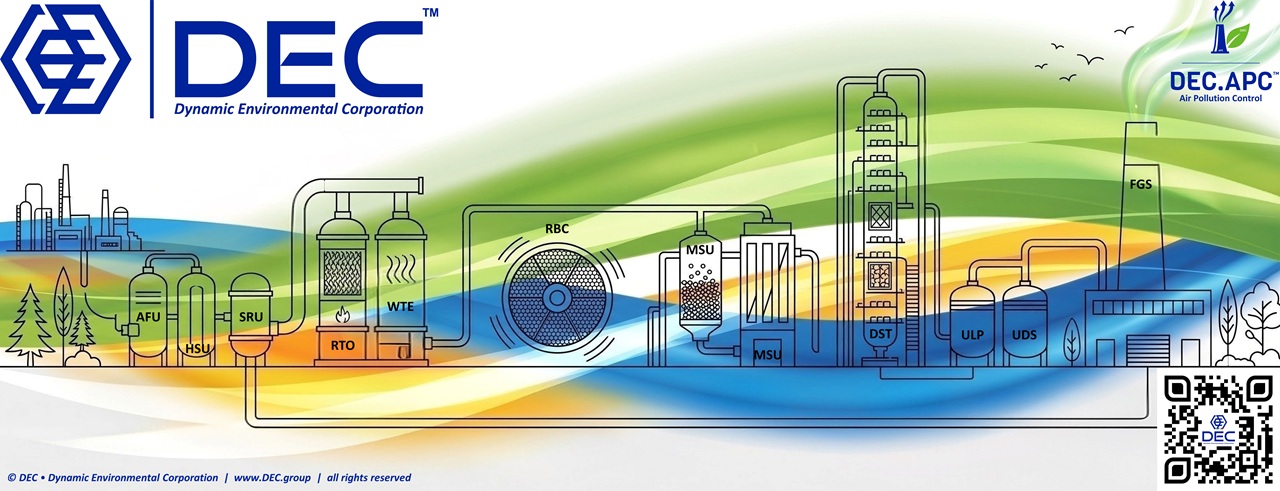
DEC industrial Air Pollution Control technologies for VOC and HAP emission control

DEC • Engineering Around the Emission Stream

DEC does not start from a preselected equipment package. We start with the process and emission stream, assess the available data, define the treatment objective and evaluate the technology or combination of technologies best suited to the application.

DEC • Industrial Air Pollution Control Technology Portfolio

DEC combines a broad technology portfolio with multidisciplinary engineering so that the treatment architecture can be selected around the actual process, emission characteristics and performance objective.

SRU™

Solvent Recovery Units
Vapor-phase VOC capture and solvent recovery using TSA, T+VSA and direct condensation pathways.

XTO™

Thermal Oxidizers
Direct, regenerative and catalytic thermal oxidation for suitable VOC and HAP streams.

XBC™

Concentration Systems
Static, rotary and fluidized-bed concentration for dilute VOC emission streams.

ADM™

Dehydration Systems
Molecular-sieve and advanced dehydration pathways for solvent and process applications.

DST™

Distillation Systems
Batch and continuous distillation for solvent separation and purification.

XSU™

Dry & Wet Scrubbers
Gas treatment technologies for acid gases, particulates and other suitable pollutants.

XFU™

Exhaust Filtering
Filtering technologies for aerosols, particulates, mist and other exhaust contaminants.

ERS™

Energy Recovery
Thermal and process energy recovery pathways integrated where application conditions permit.

AFO™

Flow Optimization
Process-flow improvement technologies supporting throughput, efficiency and operating control.

TGS™

Technical Gases
On-site technical gas generation and supply for industrial applications.

TSS™

Technical Support Services
Commissioning, maintenance, spare parts and technical support across the system lifecycle.

BSM™

Bulk Specialty Materials
Activated carbon and specialty adsorbent media for DEC and third-party systems.

SSD

Solvent Storage & Distribution
Supporting solvent handling and distribution requirements within the broader process solution.

From Process Data to the Right APC Architecture

Technology selection begins with the emission stream. Useful inputs include airflow, solvent or pollutant composition, concentration, temperature, moisture, operating pattern and applicable emission requirements. DEC can clarify missing information and compare alternative treatment pathways.

engineering • project delivery • lifecycle support

From Emission Assessment to Operating Plant

01

Process Assessment
Analyse the process, emission streams, concentrations, flow rates and requirements.

02

Feasibility & Selection
Compare candidate technologies against process conditions, utilities and project constraints.

03

Engineering & Delivery
Develop the engineered APC system and coordinate procurement, fabrication, installation and commissioning.

04

Acceptance & Support
Verify agreed performance and support reliable operation through maintenance and technical services.

DEC • Engineering Strength, Technology Depth and Industrial Focus

DEC's brand is built around engineering capability. Process, environmental, mechanical, thermal, automation and applications expertise are brought together to develop APC systems around the actual emission stream.

Our DEC ENGINEERING, DEC LAB and DEC AUTOMATION capabilities reinforce the connection between process analysis, technology development, controls and industrial execution.

DEC's quality, safety and environmental framework, together with the relevant ISO 9001, ISO 14001 and ISO 45001 information, supports disciplined project execution and continual improvement.

100+ Years of Industrial Technology Heritage

DEC combines 100+ Years of Industrial Technology Heritage with a forward-looking engineering culture. Heritage is not simply a measure of time: it represents accumulated process knowledge, technology development and industrial experience applied to increasingly complex emission streams.

Explore DEC's past, present and future and facts, figures and milestones to understand the industrial technology heritage behind today's DEC.

DEC • Global Engineering, Local Support

DEC combines international project experience with a distributed network of facilities, partners and local organizations. Customers can connect with DEC through the DEC Global Locations network to identify the most relevant regional point of contact.

For a project discussion, connect with the DEC Technical Sales & Applications Engineering team and bring the process and emission-stream information already available.
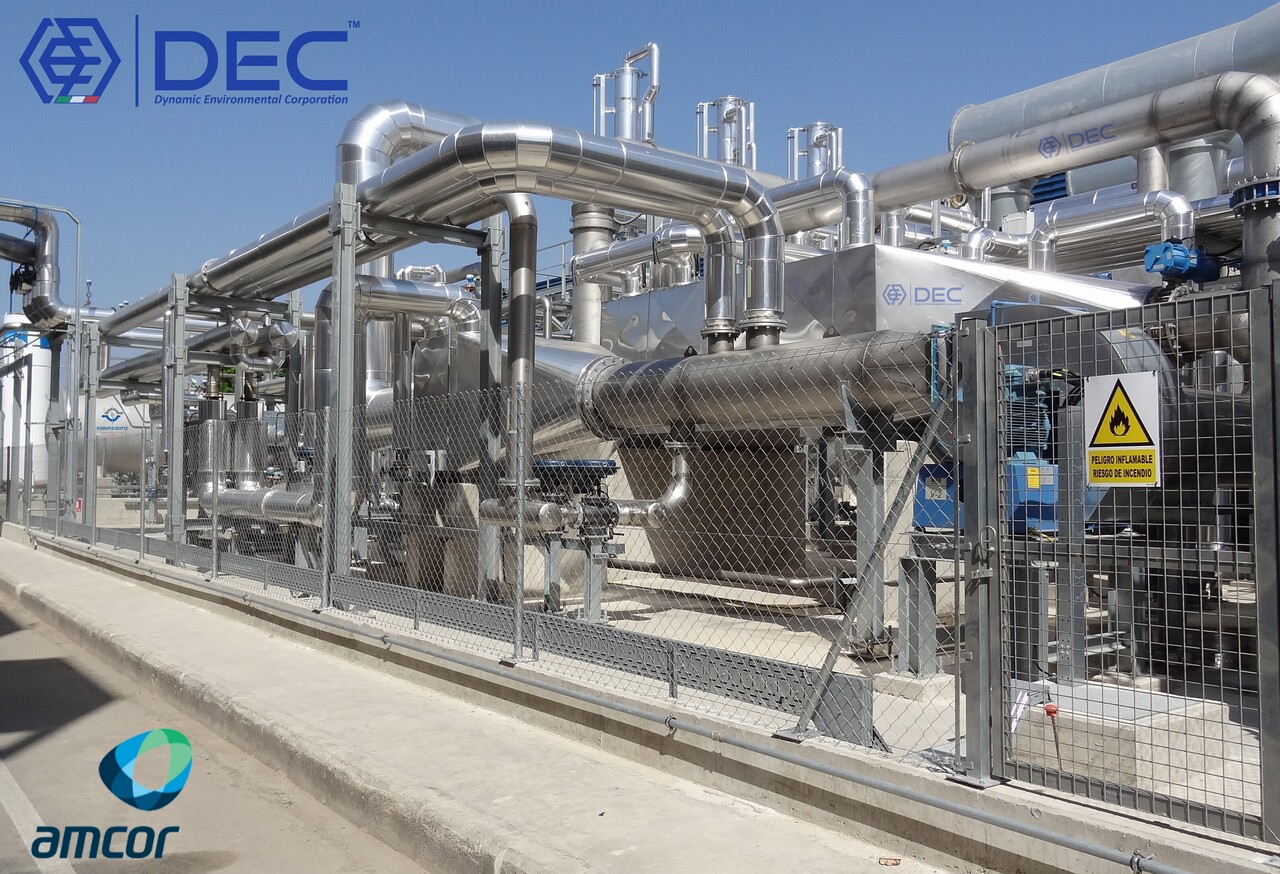

DEC activated-carbon solvent recovery system for industrial VOC emission control
get in touch

Ready to Start Your Project?

Contact Us

Reach our Technical Sales & Applications engineering team to discuss your VOC & HAP emission control requirements
industrial APC • processes • technologies • services

FAQs • Frequently Asked Questions

Clear answers to common questions about DEC's industrial Air Pollution Control portfolio, technology selection and project support.

What does DEC do?

DEC engineers industrial Air Pollution Control systems for VOC, HAP and other industrial emissions, including solvent recovery, VOC concentration, thermal oxidation and complementary treatment technologies.

How does DEC select an Air Pollution Control technology?

DEC starts with process and emission-stream data, including flow, composition, concentration, temperature, moisture, operating pattern and applicable requirements. DEC then evaluates alternative treatment pathways and selects or combines technologies around the application.

What Air Pollution Control technologies does DEC provide?

DEC provides solvent recovery units, thermal oxidizers, VOC concentration systems, dehydration systems, distillation systems, dry and wet scrubbers, exhaust filtering, energy recovery, flow optimization, technical gases, technical support and specialty adsorbent materials.

Can DEC combine different Air Pollution Control technologies?

Yes. DEC can integrate recovery, concentration, oxidation, scrubbing, filtration and energy recovery when a combined treatment strategy is appropriate for the emission stream and treatment objective.

What is a solvent recovery unit?

A solvent recovery unit captures suitable solvent vapours from an industrial process emission stream so that valuable solvents can be recovered for reuse instead of being lost with the exhaust.

What is the difference between solvent recovery and thermal oxidation?

Solvent recovery focuses on removing and recovering valuable VOCs for reuse where technically and economically appropriate. Thermal oxidation focuses on treating non-recoverable VOC and applicable HAP loads by destruction and removal.

What industries does DEC serve?

DEC serves industrial processes with significant VOC, HAP and other emission-control requirements, including flexible packaging, chemical processing, pharmaceutical and industrial manufacturing applications.

Does DEC provide customized environmental engineering solutions?

Yes. DEC engineers systems around the customer's process, emission stream, treatment objective, operating conditions, utilities, site constraints and applicable requirements rather than supplying a one-size-fits-all equipment package.

Does DEC operate internationally?

Yes. DEC combines international project experience with local delivery and support, serving customers across 50+ countries. Regional contacts and operating locations are available through the DEC Global Locations network.

What information should be provided for an initial DEC APC project discussion?

Useful starting information includes Solvent Laden Air flow, solvent or pollutant composition, VOC concentration, temperature, moisture, operating pattern and applicable emission requirements. DEC can clarify missing information and identify the next technical step.

How does DEC support projects after commissioning?

DEC provides lifecycle technical support according to project requirements, including commissioning support, maintenance, spare parts, optimization and technical assistance.

Is pricing available for DEC's process technologies?

DEC's process and Air Pollution Control systems are custom-engineered and quote-based rather than standardized off-the-shelf products with a fixed list price. Scope, sizing and pricing depend on the specific application and project requirements.

built on innovation,
inspired by passion

DEC HOLDING logo