Industrial Air Pollution Control Engineered Around the Emission Stream
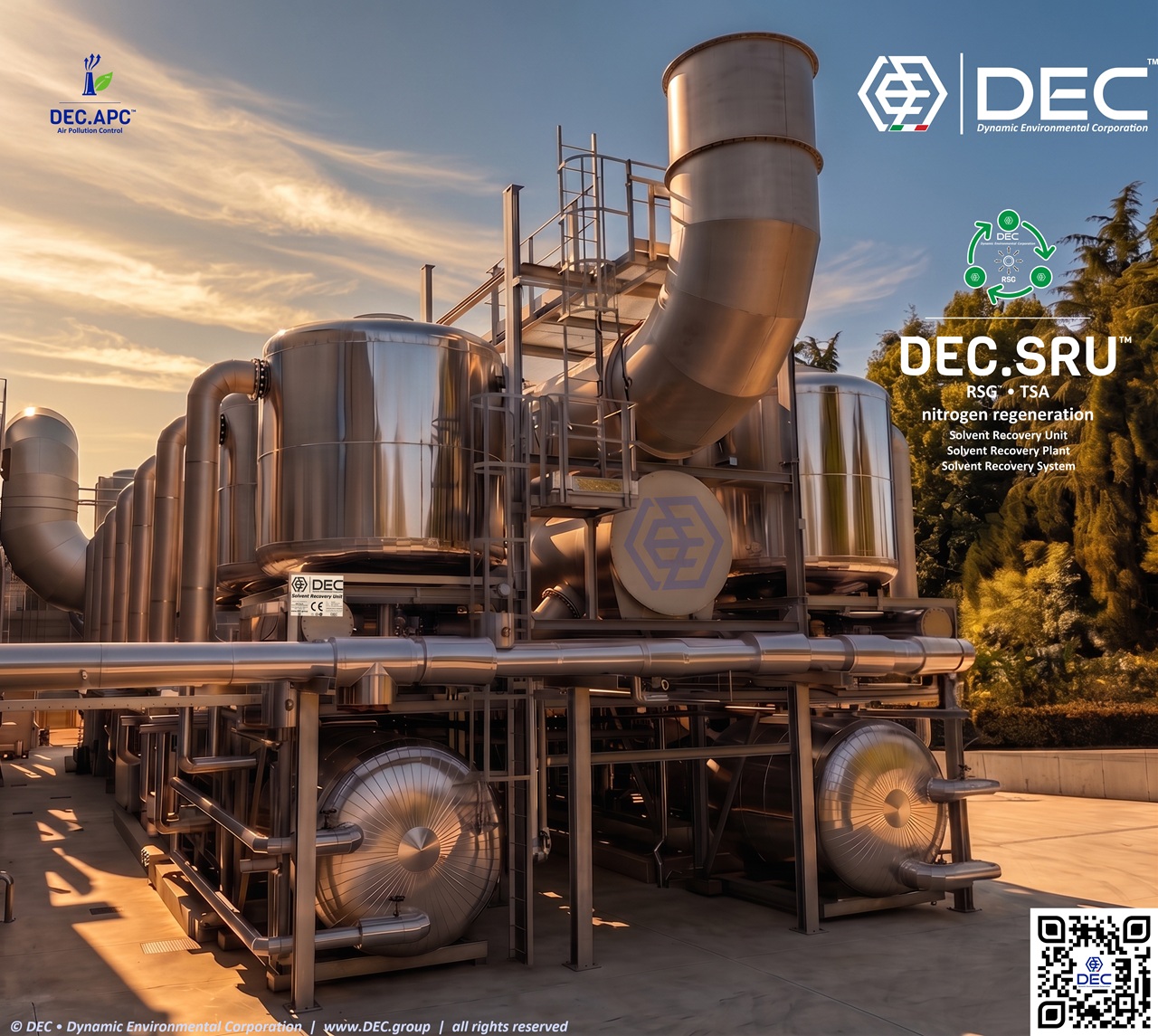
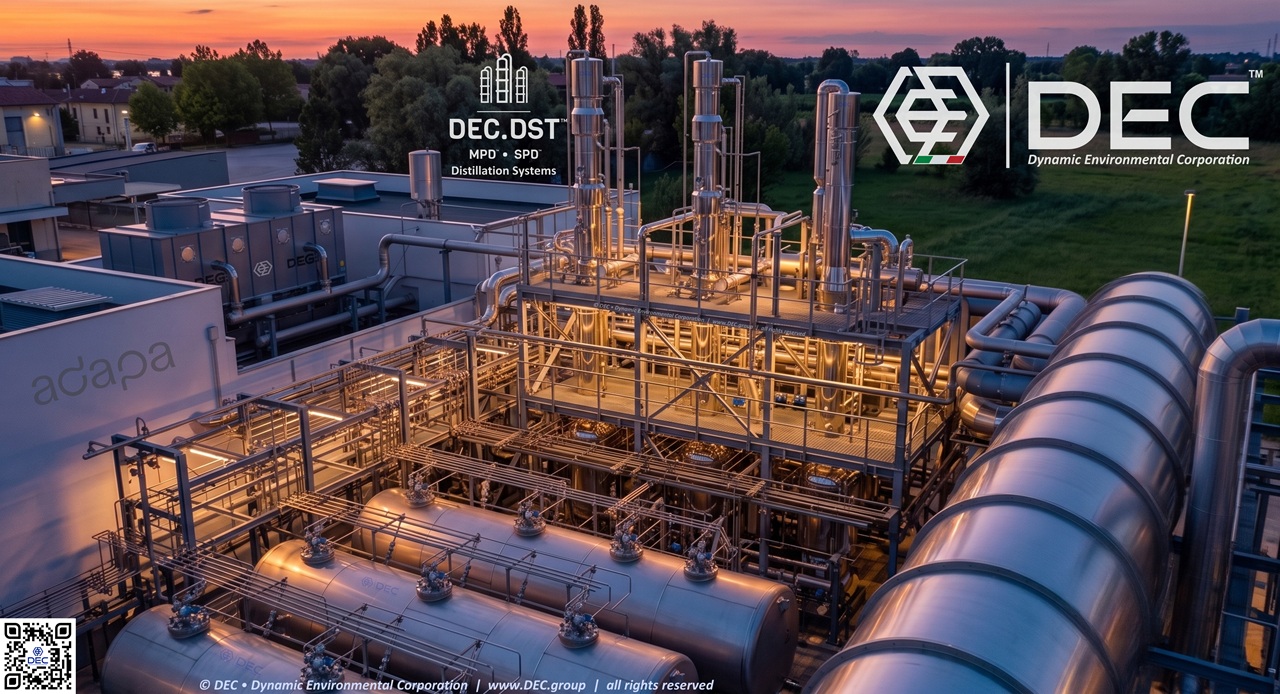
DEC • Dynamic Environmental Corporation engineers, designs and delivers industrial Air Pollution Control (APC) systems for Volatile Organic Compounds (VOC), Hazardous Air Pollutants (HAP) and other industrial emissions.
The starting point is the emission stream rather than a preselected equipment package. DEC evaluates process conditions, treatment objectives and applicable requirements, then selects and engineers the appropriate technology or integrated system.
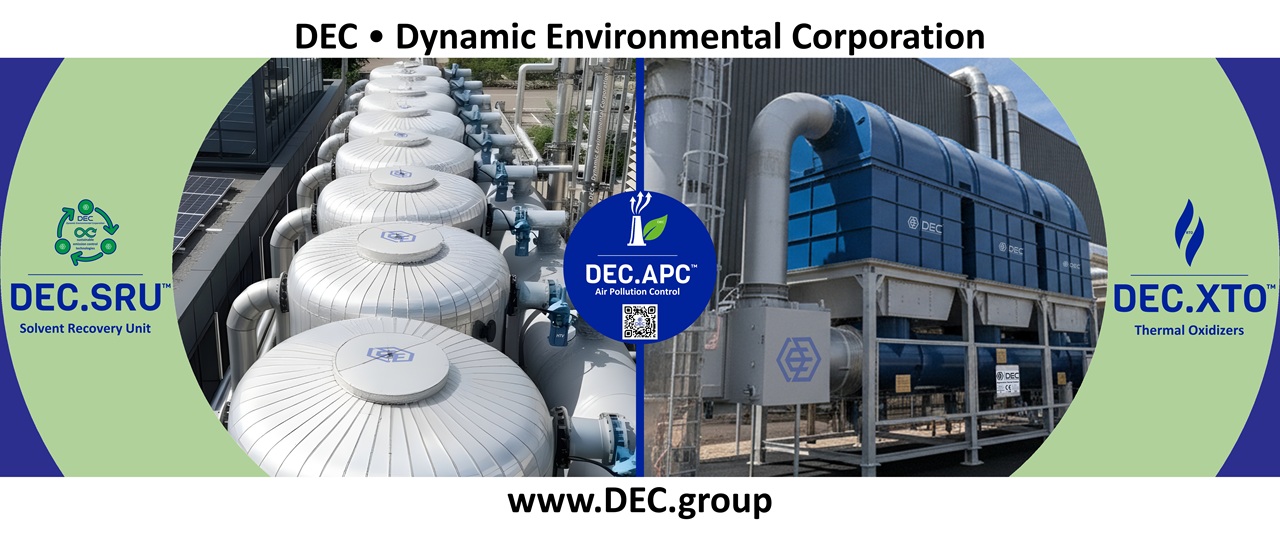
DEC at a glance
DEC serves industrial processes across established industrial markets, including flexible packaging, converting, coating, chemical, petrochemical and pharmaceutical applications. The industry provides the process context; the actual emission stream determines the treatment architecture.
Solvent Laden Air Flow Rates:
from Compact to Ultra-High Capacity
DEC engineers industrial Air Pollution Control systems for Solvent Laden Air (SLA) flow rates ranging from approximately 200 m³/h to 1,000,000 m³/h. This wide flow-rate range enables DEC to engineer emission-control systems for both relatively small process exhaust streams and very large industrial airflows.
The required APC system configuration is determined from several parameters (project conditions), including the actual Solvent Laden Air flow rate, solvent composition, VOC concentration, temperature, moisture, operating conditions and applicable emission requirements.
Performance Defined by the Abatement Objective
DEC designs industrial Air Pollution Control systems, including solvent recovery and thermal oxidation, around measurable abatement objectives, project requirements and the applicable environmental regulatory framework. Depending on the emission stream and selected technology, performance may be defined by recovery efficiency, destruction and removal efficiency, outlet concentration, mass emissions, energy performance, monitoring requirements and other agreed acceptance criteria.
Regulatory requirements are established for each application from the customer's environmental permit and applicable project requirements, together with the environmental legislation, emission standards, prescribed limits, codes and regulatory requirements applicable at the installation site. For projects in the European Union and EEA, this may include the Industrial Emissions Directive framework, including Directive (EU) 2024/1785 (IED 2.0), applicable BAT conclusions and associated BAT-AEL requirements. For projects in the United States, the applicable framework may include the US Clean Air Act, EPA requirements such as NESHAP, NSPS and VOC control requirements, together with applicable state and local air-quality rules and permits. For projects in China, DEC evaluates the applicable national and local environmental legislation, air-pollutant emission standards, permitting conditions, monitoring requirements and other requirements issued under the Chinese environmental regulatory framework.
DEC therefore does not define APC performance by a generic efficiency value alone. The required performance is established against the specific pollutant, emission source, process conditions, regulatory limit, measurement methodology and compliance obligation applicable to the installation. Where required, the engineering basis can incorporate emission concentration limits, total or specific pollutant mass emissions, VOC/HAP requirements, destruction or removal performance, recovery performance, operating conditions, monitoring provisions and energy-efficiency considerations.
This regulatory and engineering approach is particularly relevant where requirements are evolving or differ between jurisdictions. DEC evaluates the applicable requirements during process assessment and technology selection and engineers the APC configuration accordingly, including recovery, concentration, oxidation, scrubbing, filtration and energy-recovery stages where appropriate.
Regulatory reference: DEC maintains technical information on VOC emission-control regulations, regulatory enforcement and applicable emission-control requirements in its dedicated VOC Emission Control Regulations & Enforcement resource.
Regulatory compliance is application- and site-specific. Final compliance depends on the applicable jurisdiction, installation permit, pollutant and emission source, applicable emission standards or BAT requirements, operating conditions, monitoring methodology and verification by the competent authority or other legally applicable conformity process. DEC's APC systems are engineered to meet the agreed project performance requirements and applicable regulatory design basis identified for the specific installation.
RRE
Recovery and Removal Efficiency
RRE quantifies the percentage of pollutant mass removed and recovered across an industrial VOC recovery system, with the objective of recovering valuable solvents for reuse.
CRE
Concentration and Removal Efficiency
CRE quantifies the concentration performance and pollutant removal achieved across an industrial concentrator. The metric combines VOC concentration into a reduced-volume process stream with removal from the treated exhaust before discharge at stack.
DRE
Destruction and Removal Efficiency
DRE quantifies the percentage of pollutant mass removed or destroyed across an industrial oxidizer, with the objective of treating non-recoverable VOCs and applicable pollutants.
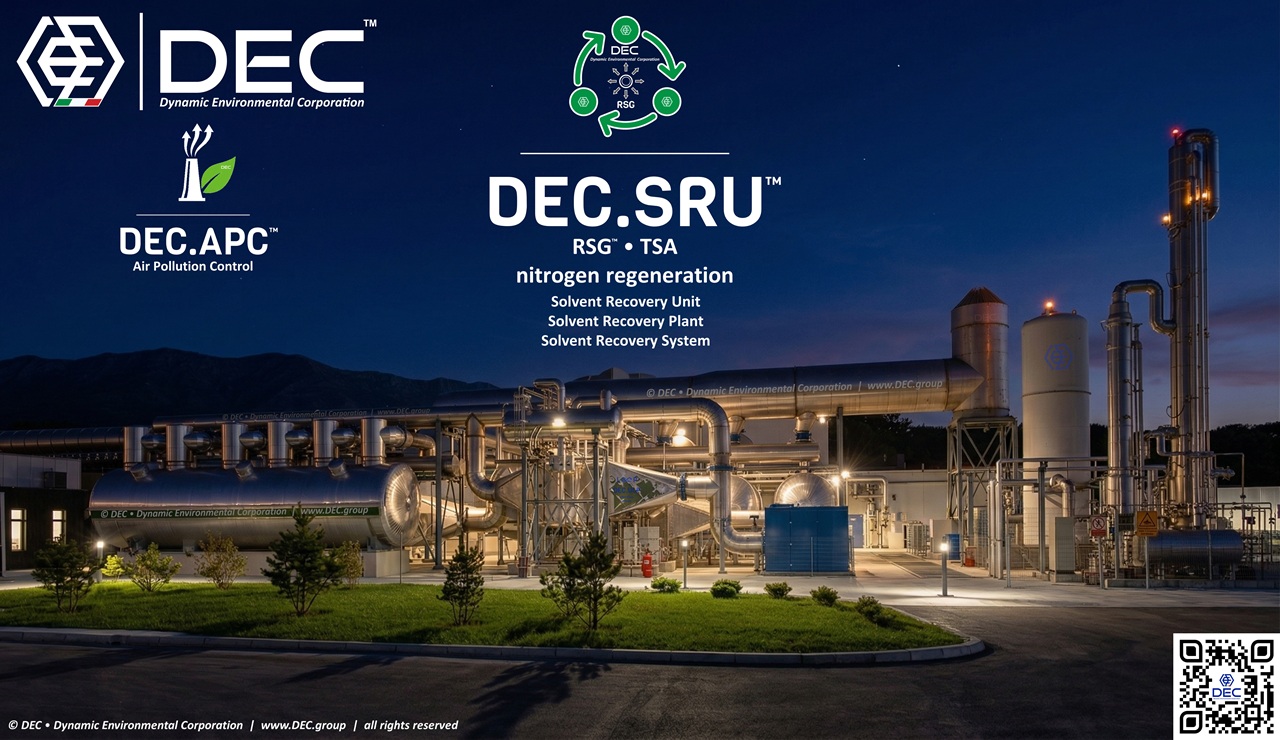
DEC.SRU™ Solvent Recovery, DEC.XBC™ concentrator, and DEC.XTO™ thermal oxidation systems are engineered around the required abatement performance, process conditions and applicable environmental requirements. Actual Air Pollution Control (APC) performance depends on the selected technology, solvent or pollutant characteristics, inlet concentration, airflow, moisture, operating conditions, measurement methodology and applicable environmental permit requirements.
From Industrial Market to Emission-Control Architecture
DEC applies the same emission-stream engineering approach across different industrial markets. The industry and process define the operating context; DEC then evaluates the actual emission stream, treatment objective and constraints to determine whether to recover, concentrate, oxidize, treat or recover energy .
Start with the Data:
Evaluate, Select and Engineer the Right Process
DEC starts with the collection and analysis of process and emission-stream data. DEC's engineering team reviews the available information, identifies and clarifies missing or uncertain data, and defines the process conditions and treatment requirements for the application.
Applicable emission requirements are established from the customer's environmental permit, where applicable, customer-specific requirements, and the relevant local environmental legislation, regulations, codes and prescribed limits.
DEC's broad portfolio enables alternative process pathways to be evaluated and the most appropriate process or combination of processes to be selected and engineered for the specific application.
Recover
Recover valuable solvents and VOCs where recovery is technically and economically appropriate.
Concentrate
Concentrate dilute VOC streams before downstream treatment or recovery.
Oxidize
Oxidize non-recoverable VOC and HAP emissions through direct, regenerative or catalytic thermal oxidation.
Treat
Apply appropriate scrubbing, filtration and other treatment technologies for additional pollutants.
Recover Energy
Recover usable thermal or process energy where the application permits.
One Emission Stream Does Not Always Need One Technology
DEC's distinctive approach is to engineer the treatment pathway around the stream itself. When recovery, concentration, oxidation or complementary treatment solve different parts of the problem, DEC can combine them into one coordinated APC system.
Recover what has value
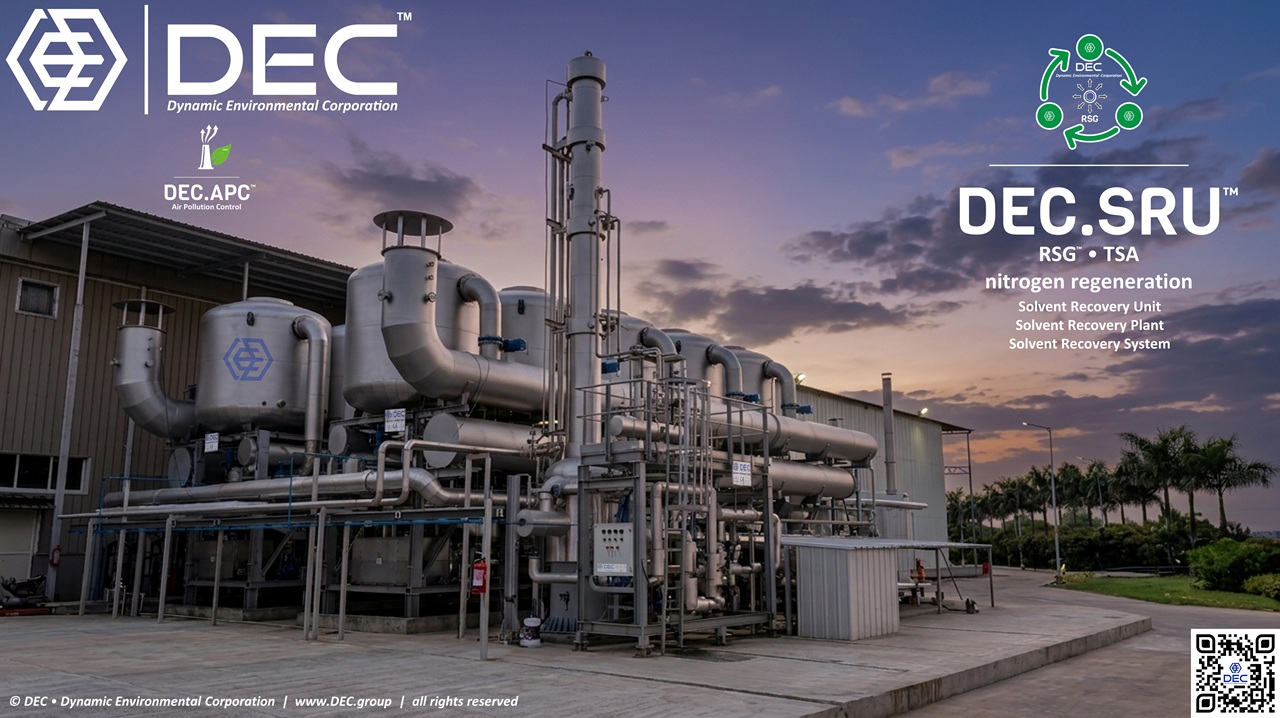
Where solvent recovery is technically and economically appropriate, DEC can capture VOCs for reuse rather than treating them only as waste.
explore DEC.SRU™ solvent recovery →Concentrate what is dilute
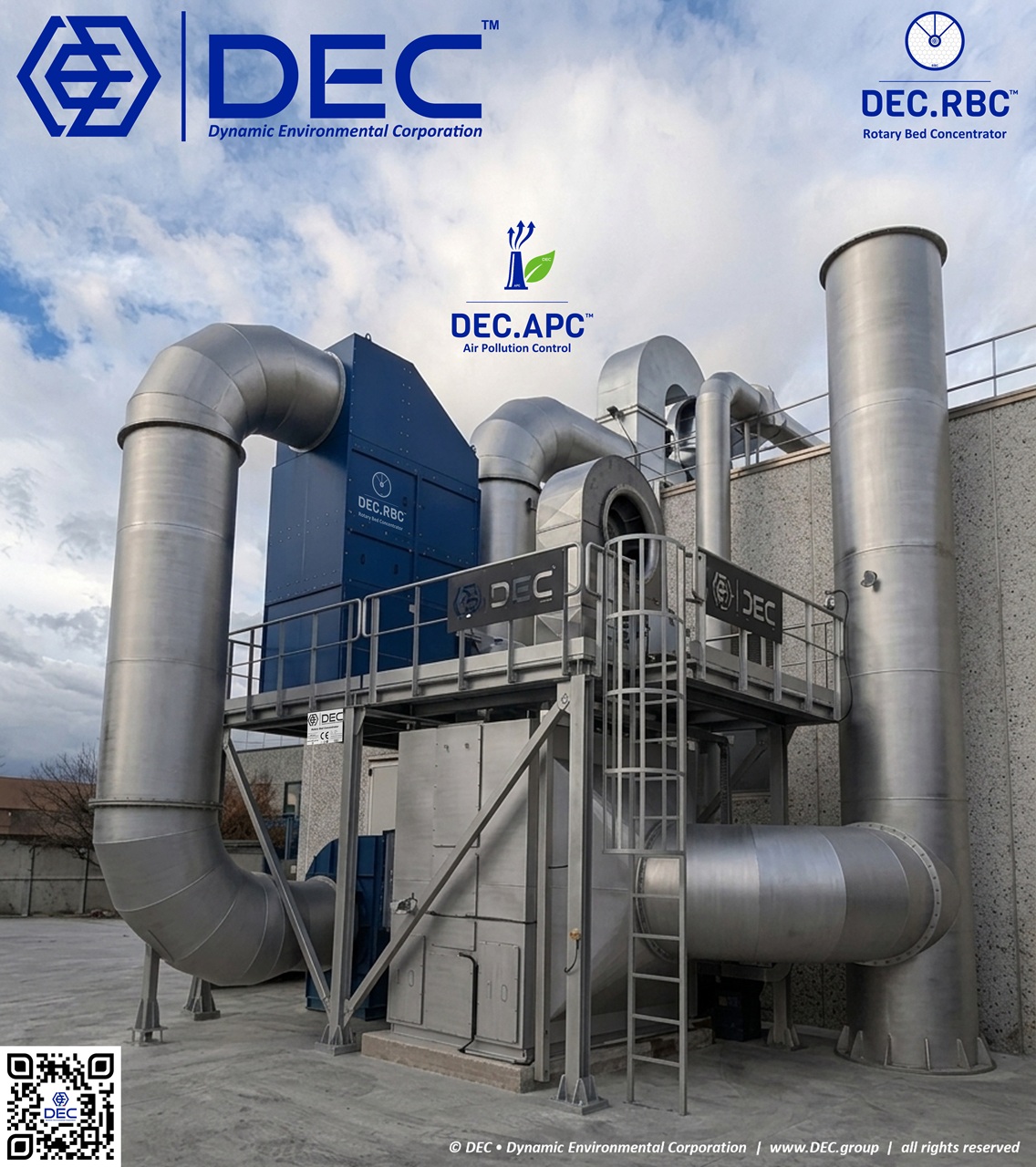
For dilute VOC streams, concentration can reduce downstream air volume and create a more suitable stream for recovery or oxidation.
explore XBC™ concentration →Oxidize what is not recoverable
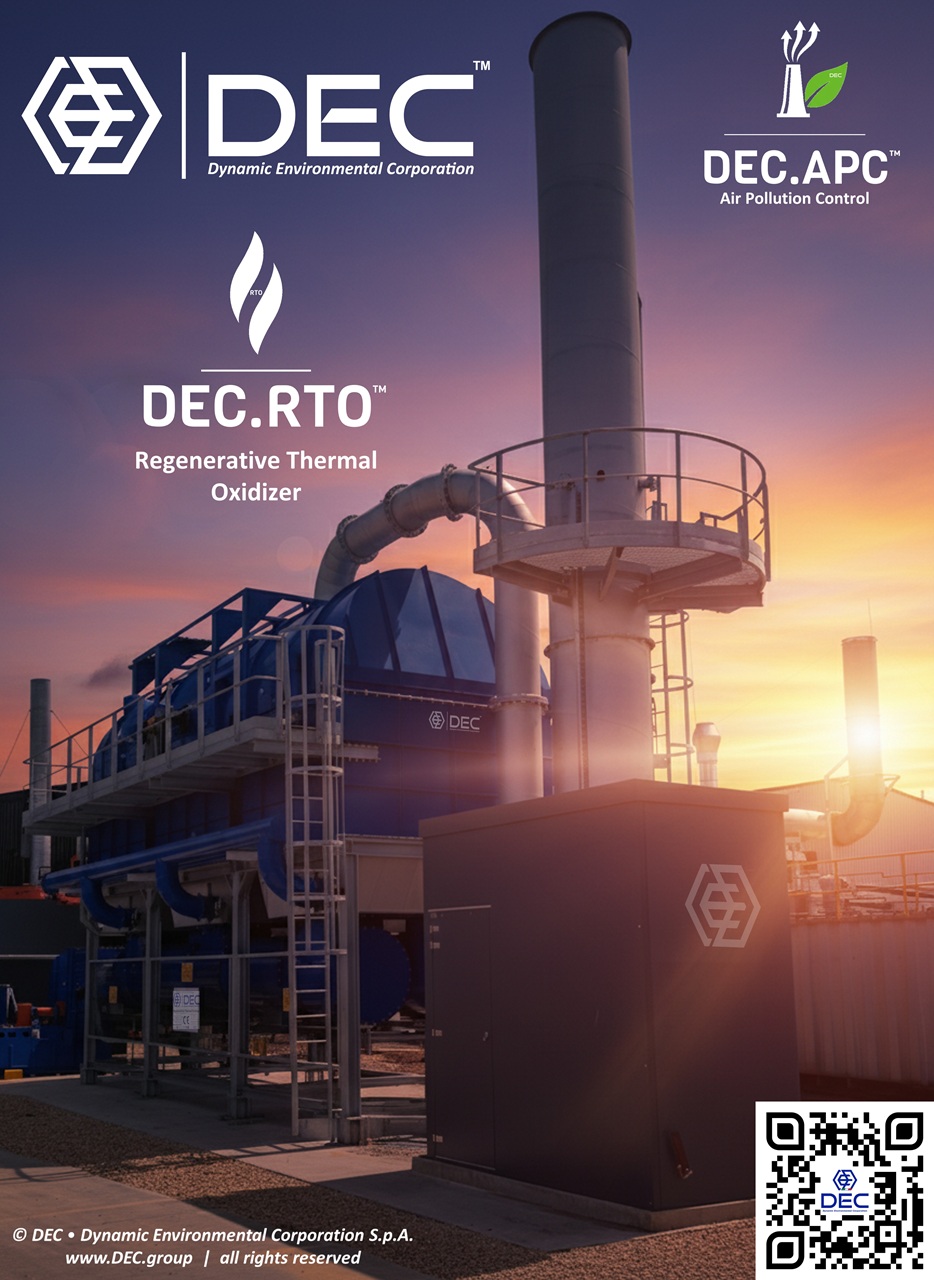
Non-recoverable VOC and HAP loads can be routed to direct, regenerative or catalytic thermal oxidation according to the application.
explore DEC.XTO™ thermal oxidation →Recover energy where it matters
Energy recovery can be integrated where process conditions allow useful thermal or process energy to be recovered; DEC's DEC.ERS™ portfolio includes UltraLoop, waste heat recovery and waste-to-energy pathways.
explore DEC.ERS™ energy recovery →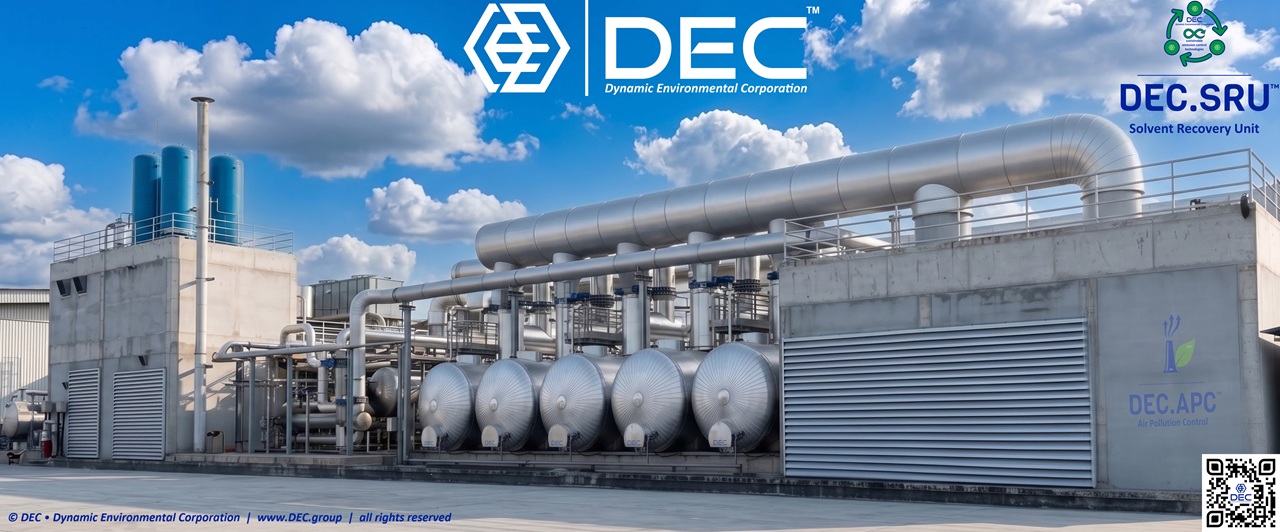
Industrial Air Pollution Control Technologies
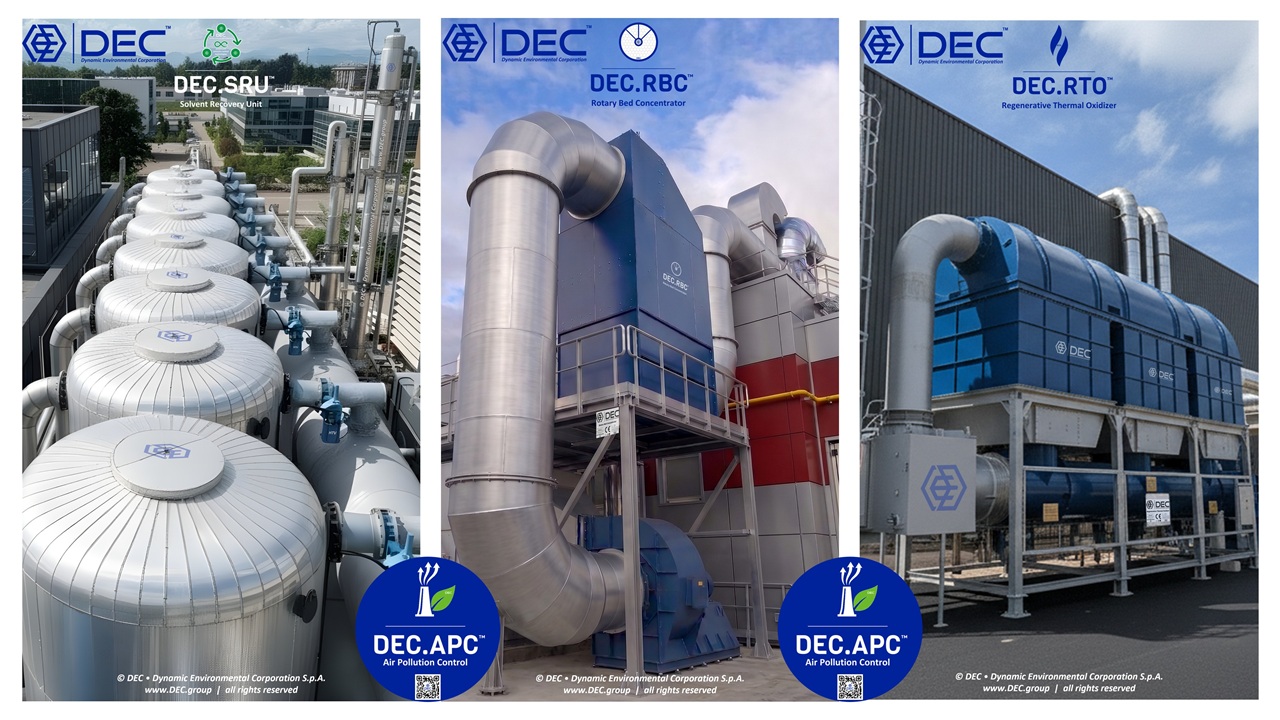
DEC provides a portfolio of industrial Air Pollution Control technologies for recovering, concentrating, oxidizing and treating VOCs, HAPs and other industrial emissions. Select a technology family to explore its individual processes.
TSA (steam & inert gas) · T+VSA (combined TSA & VSA)· VSA (vacuum) · Condensation
Which Air Pollution Control Technology Is Appropriate?
The appropriate technology depends on the emission characteristics, treatment objective and operating requirements. DEC can combine technologies when a single treatment step is not sufficient.
| Emission challenge or objective | Typical DEC approach |
|---|---|
| Recover valuable solvent vapours | DEC.SRU™ solvent recovery |
| Concentrate dilute VOC emissions | DEC.XBC™ VOC concentration |
| Oxidize non-recoverable VOC or HAP emissions | DEC.XTO™ thermal oxidation |
| Remove or treat other gaseous pollutants | DEC.XSU™ scrubbing |
| Remove particulates, aerosols or other exhaust contaminants | DEC.XFU™ filtration |
| Recover usable thermal or process energy | DEC.ERS™ energy recovery |
Bring the Data You Have.
DEC Will Define What Is Missing.
For an initial technical discussion, useful inputs can include Solvent Laden Air (SLA) flow, solvent composition, VOC concentration, temperature, moisture, operating pattern and applicable emission requirements. DEC can clarify missing information and compare alternative treatment pathways.
FROM ENGINEERING TO OPERATION
From Emission Assessment to Operating Plant
DEC provides process assessment, APC system engineering, procurement, fabrication, installation, commissioning and lifecycle technical support according to project requirements, following a turn-key EPC (Engineering, Procurement, Construction) delivery model.
Process Assessment
Feasibility Analysis
Site Visit
Scope of Work Definition
APC System Engineering
Turn-key EPC Delivery
APC System Acceptance
Lifetime Support
Management Systems Supporting Responsible Industrial Engineering
DEC applies an integrated management-system approach across quality, environmental performance and occupational health & safety, supporting disciplined engineering, project execution and continual improvement.
Quality Management
A systematic framework for consistent processes, customer requirements, engineering quality and continual improvement throughout DEC's activities.
Environmental Management
A structured approach to managing environmental aspects, improving environmental performance and integrating environmental responsibility into DEC's operations.
Occupational Health & Safety
A systematic framework for occupational health and safety, risk prevention and continual improvement of workplace safety performance.
Quality. Environment. Safety. Three complementary management systems supporting the way DEC engineers, delivers and supports industrial technology.
Multidisciplinary Engineering Behind Every Emission Stream
DEC combines process, environmental, mechanical, thermal, automation and applications engineering to develop Air Pollution Control systems around the actual emission stream, operating conditions and treatment objective.
Process & Applications Engineering
Emission-stream analysis, process conditions, mass and energy balances, feasibility assessment and technology selection.
explore DEC ENGINEERING →Laboratory & Technology Development
Application testing and technology development supporting solvent recovery, adsorption and industrial emission-control solutions.
explore DEC LAB →Automation & Data Engineering
Automation, control architecture, monitoring and data-driven support for reliable operation and lifecycle optimization.
explore DEC AUTOMATION →People Behind the Technology
DEC brings together engineering, laboratory, automation, analytics and technical-service capabilities across the lifecycle of industrial emission-control systems, from initial assessment through operation and ongoing support.
A Century of Industrial Technology Heritage
DEC combines more than a century of industrial technology heritage. That accumulated knowledge supports today's process-led approach to industrial Air Pollution Control.
1920s
Activated-carbon technology heritage and early solvent-recovery applications.
1946
DEC roots established in Milan, Italy, as Depurazione Emissioni per l'Industria Chimica .
1966–1988
Evolution as Depurazione Emissioni Convogliate and expansion of industrial emission-control engineering.
1988 → today
Integration of additional activated-carbon and solvent-recovery technology heritage into DEC's engineering portfolio, followed by continued development of industrial APC technologies.
Heritage is not simply a measure of time: it represents accumulated process knowledge, technology development and experience applied to increasingly complex industrial emission streams.
Engineering Experience You Can Verify
DEC's reference portfolio includes 2,500+ projects delivered across 50+ countries, spanning solvent recovery, VOC concentration, thermal oxidation and complementary Air Pollution Control systems.
Its installed experience includes particular depth in activated-carbon solvent recovery, including inert-gas regeneration, alongside a broader integrated APC portfolio.
International Engineering, Local Delivery
DEC combines international project experience with a distributed network of facilities, partners and local organizations. With operations in 50+ countries, DEC supports customers with engineering, delivery and technical services close to their operating sites.
explore DEC global locations →Have an Industrial Emission-Control Challenge?
Send DEC the process and emission-stream information you already have. The Technical Sales & Applications Engineering team can clarify the data, discuss the treatment objective and identify the appropriate next step.
Frequently Asked Questions
industrial challenges, DEC solutions
What does DEC do?
DEC engineers and delivers industrial Air Pollution Control systems for VOC, HAP and other industrial emissions, including recovery, concentration, thermal oxidation and complementary treatment technologies.
What are RRE and DRE in industrial emission control?
RRE (Recovery and Removal Efficiency) describes the percentage of pollutant mass removed and recovered across a solvent recovery system, while DRE (Destruction and Removal Efficiency) describes the percentage of pollutant mass removed or destroyed across an industrial oxidizer. DEC uses the appropriate performance metric according to the treatment objective: solvent recovery focuses on recovering valuable VOCs, while thermal oxidation focuses on destroying non-recoverable VOCs and other applicable pollutants.
How can solvent recovery improve the Triple Bottom Line (TBL)?
Where the process and solvent stream are suitable for recovery, an DEC.SRU™ can recover valuable solvents from process emissions instead of losing them with the exhaust. This can create economic value through solvent recovery and reuse, environmental value through reduced solvent losses and VOC releases, and operational value through an engineered recovery system integrated with the process. These three dimensions form the Triple Bottom Line (TBL) perspective.
How does DEC select an emission-control technology?
DEC collects and analyses process and emission-stream data, identifies and clarifies missing or uncertain information, considers the customer's environmental permit and customer-specific requirements together with relevant local environmental legislation, regulations, codes and prescribed limits, and then evaluates and selects the appropriate technology or integrated system.
Can DEC combine different Air Pollution Control technologies?
Yes. DEC can integrate technologies such as solvent recovery, VOC concentration, thermal oxidation, scrubbing, filtration and energy recovery when a combined treatment strategy is appropriate.
What industries does DEC serve?
DEC serves industrial processes with significant VOC, HAP and other emission-control requirements, including flexible packaging, chemical processing and industrial manufacturing.
What are the stages of a DEC APC project?
DEC's project process runs from process assessment through feasibility analysis, site visit, scope of work definition, APC system engineering, turn-key EPC delivery and system acceptance testing, to ongoing lifetime support.
How can I discuss an industrial emission-control project with DEC?
Contact DEC's Technical Sales and Applications Engineering team to discuss the emission stream, process requirements and potential Air Pollution Control solutions.
Search DEC Technologies, Processes and References