Engineered Equipment for Hazardous Areas
ATEX | IECEx | UL | CSA | NEC | NFPA
DEC designs, manufactures, tests, and supplies electrical and mechanical equipment for installation in hazardous locations where flammable gases, vapours, mists, or combustible dusts may create potentially explosive atmospheres. Our engineering teams develop safe, reliable, and compliant solutions for demanding industrial applications worldwide.
Depending on project requirements and destination country, equipment can be designed and manufactured in accordance with the European ATEX Directive, the IECEx Certification Scheme, North American UL and CSA standards, and other internationally recognized regulations governing hazardous locations.
Complete Engineering and Manufacturing Capability
DEC provides complete engineering, manufacturing, assembly, inspection, testing, certification support, and documentation for hazardous area equipment integrated into industrial process plants.
- Electrical engineering
- Instrumentation engineering
- Hazardous area classification review
- Explosion protection concept selection
- Control panel design
- Cable routing and termination design
- Equipment selection and specification
- Mechanical integration
- Factory Acceptance Testing (FAT)
- Inspection and certification support
- Complete technical documentation
Equipment for Hazardous Locations
DEC supplies complete hazardous area systems and electrical equipment suitable for installation in classified locations across numerous industrial sectors.
- Electrical control panels
- PLC and automation systems
- Motor control centres (MCC)
- Local control stations
- Junction boxes
- Operator interfaces (HMI)
- Instrumentation panels
- Analyser systems
- Gas detection systems
- Field instrumentation
- Explosion-proof lighting systems
- Electrical heaters
- Motors and drives
- Skid-mounted process systems
Equipment is integrated into solvent recovery systems, VOC abatement plants, thermal oxidizers, gas treatment systems, energy recovery plants, and other industrial process installations.
Global Hazardous Area Compliance
DEC supports projects worldwide by designing equipment in accordance with the regulatory and certification requirements applicable to the installation site. Each project is evaluated individually to determine the appropriate standards, protection concepts, certification requirements, and technical documentation.
- ATEX Directive 2014/34/EU
- IECEx Certification Scheme
- UL Standards
- CSA Standards
- National Electrical Code (NEC)
- Canadian Electrical Code (CEC)
- Project-specific customer specifications
Explosion Protection Concepts
Equipment is selected and engineered using the most appropriate explosion protection method according to the process, hazardous area classification, and applicable standards.
- Ex d – Flameproof Enclosure
- Ex e – Increased Safety
- Ex i – Intrinsic Safety
- Ex p – Pressurized Equipment
- Ex t – Protection by Enclosure for Dust
- Ex m – Encapsulation
- Ex n / Ex ec – Non-sparking Equipment
Hazardous Area Classification
DEC equipment can be supplied for installation in classified hazardous locations according to both European and North American classification systems.
- Zone 0
- Zone 1
- Zone 2
- Zone 20
- Zone 21
- Zone 22
- Class I, Division 1
- Class I, Division 2
- Class II hazardous locations
- Class III hazardous locations
Applicable Standards
Engineering activities are performed using internationally recognized standards and industry best practices appropriate for each project.
- ATEX Directive 2014/34/EU
- IEC 60079 Series
- IECEx Certification Scheme
- UL Standards
- CSA Standards
- NFPA 70 – National Electrical Code (NEC)
- Canadian Electrical Code (CEC)
- Customer engineering specifications
Manufacturing Excellence
Electrical assemblies and hazardous area equipment are manufactured using controlled production processes to ensure safety, reliability, quality, and compliance with applicable standards.
- Electrical panel assembly
- Certified component installation
- Cable management
- Terminal identification
- Mechanical assembly
- Functional testing
- Factory Acceptance Testing (FAT)
- Final inspection
Inspection and Testing
Each equipment package undergoes documented inspection and testing prior to shipment to verify conformity with project specifications and applicable standards.
- Visual inspection
- Dimensional verification
- Electrical continuity testing
- Insulation resistance testing
- Functional testing
- Loop checking
- Instrument calibration verification
- Factory Acceptance Testing (FAT)
Technical Documentation
Every project is supplied with complete technical documentation supporting installation, operation, maintenance, inspection, and regulatory compliance.
- General Arrangement Drawings
- Electrical schematics
- Single-line diagrams
- Cable schedules
- Instrument data sheets
- Component certificates
- Inspection reports
- Factory Acceptance Test reports
- Declaration of Conformity, where applicable
- Operation and Maintenance Manuals
- Manufacturer's Data Book
Industrial Applications
DEC hazardous area equipment is installed in industries where explosive atmospheres may be present and where operational safety, reliability, and regulatory compliance are essential.
- Chemical processing
- Petrochemical plants
- Oil & Gas facilities
- Pharmaceutical manufacturing
- Fine chemicals
- Solvent recovery systems
- VOC emission control plants
- Thermal oxidation systems
- Industrial gas treatment
- Hydrogen applications
- Battery materials production
- Energy recovery systems
Why Choose DEC
DEC combines multidisciplinary engineering expertise with extensive experience in industrial automation, process engineering, hazardous area design, and international regulatory compliance. From engineering and equipment selection to manufacturing, testing, documentation, and worldwide delivery, we provide complete hazardous area solutions tailored to the technical, operational, and certification requirements of each project.
Ready to Start Your Project?
Contact Us
FAQs • Frequently Asked Questions
Hazardous Area Equipment & Explosion Protection • DEC
What is the difference between ATEX and IECEx certification for hazardous area equipment?
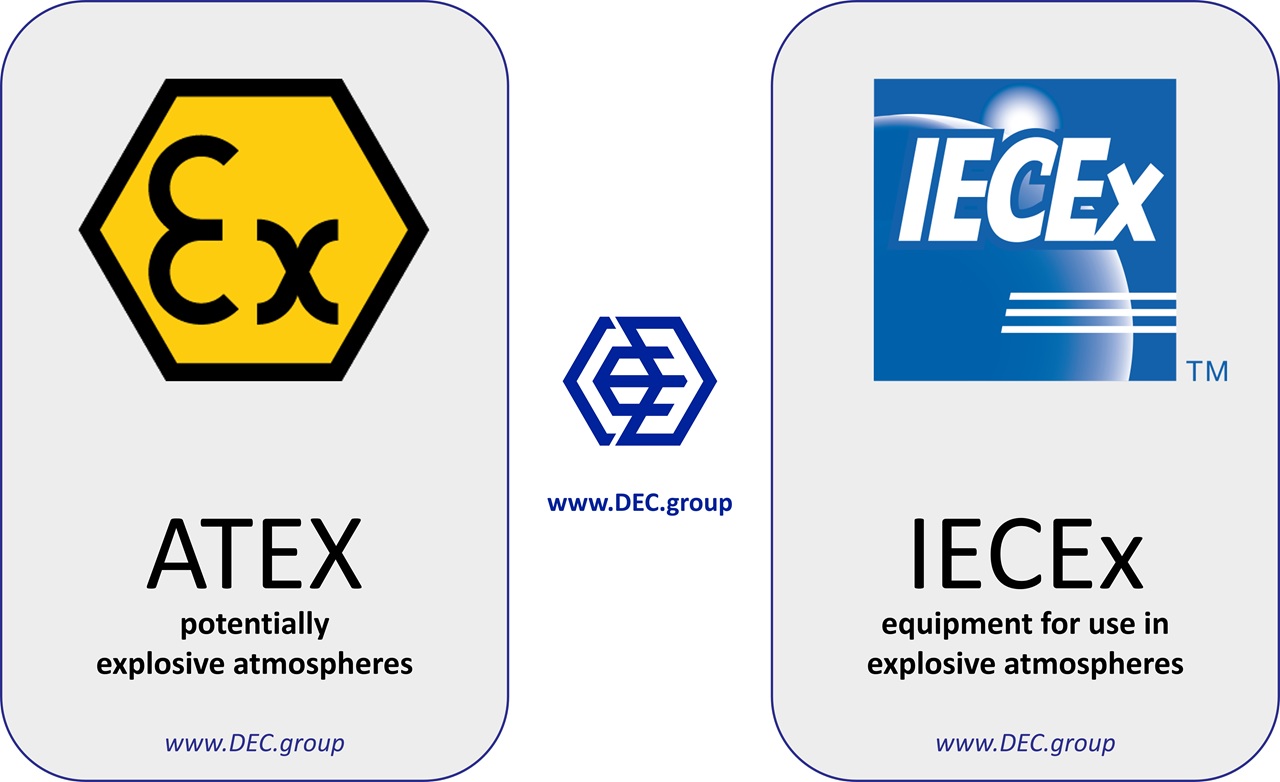
ATEX Directive 2014/34/EU is the European Union framework governing equipment intended for potentially explosive atmospheres and required for CE marking within the EU/EEA, while the IECEx Certification Scheme is an IEC-based international scheme used to demonstrate compliance with the IEC 60079 series across many countries outside the EU. DEC engineers and certifies equipment under either framework, or both, depending on the project's destination market.
What types of hazardous area equipment does DEC supply?
DEC supplies electrical control panels, PLC and automation systems, motor control centres (MCC), local control stations, junction boxes, operator interfaces (HMI), instrumentation panels, analyser systems, gas detection systems, field instrumentation, explosion-proof lighting systems, electrical heaters, motors and drives, and skid-mounted process systems for installation in classified hazardous locations.
Which explosion protection concepts does DEC apply?
Depending on the process, hazardous area classification, and applicable standards, DEC selects and engineers equipment using protection concepts including Ex d (flameproof enclosure), Ex e (increased safety), Ex i (intrinsic safety), Ex p (pressurized equipment), Ex t (protection by enclosure for dust), Ex m (encapsulation), and Ex n / Ex ec (non-sparking equipment).
Which hazardous area classifications and standards does DEC design to?
DEC designs equipment for Zone 0, 1, 2, 20, 21, and 22 locations under the European ATEX/IEC 60079 system, and for Class I Division 1, Class I Division 2, and Class II/III locations under the North American system, in accordance with ATEX Directive 2014/34/EU, the IEC 60079 series, the IECEx Certification Scheme, UL Standards, CSA Standards, NFPA 70 (National Electrical Code), and the Canadian Electrical Code (CEC).
What documentation is supplied with DEC hazardous area equipment?
Each equipment package can include General Arrangement Drawings, electrical schematics, single-line diagrams, cable schedules, instrument data sheets, component certificates, inspection reports, Factory Acceptance Test reports, a Declaration of Conformity where applicable, Operation and Maintenance Manuals, and a complete Manufacturer's Data Book.
Is pricing available for DEC hazardous area equipment, and can I purchase a system directly?
DEC hazardous area equipment is custom-engineered per project, so there is no fixed list price. This equipment is manufactured for integration into DEC's industrial process systems rather than quoted as a standalone product; individual items are only quoted separately as spare parts for existing installations. Each system is sized, designed, and priced once DEC's engineering team has reviewed the hazardous area classification, applicable standards, and certification requirements of your project. Contact DEC's Technical Sales & Applications engineering team to request a quote.