Engineered Air Pollution Control Systems
BAT | BREF | IED
DEC designs, manufactures, tests, and supplies advanced Air Pollution Control (APC) systems for the reduction, recovery, and treatment of industrial atmospheric emissions. Our technologies are engineered to achieve high environmental performance, energy efficiency, operational reliability, and long-term regulatory compliance for industrial facilities worldwide.
Within the European Union, Air Pollution Control systems are designed to support compliance with the Industrial Emissions Directive (IED) and the implementation of the applicable Best Available Techniques (BAT) described in the relevant BAT Reference Documents (BREFs) published by the European Commission.
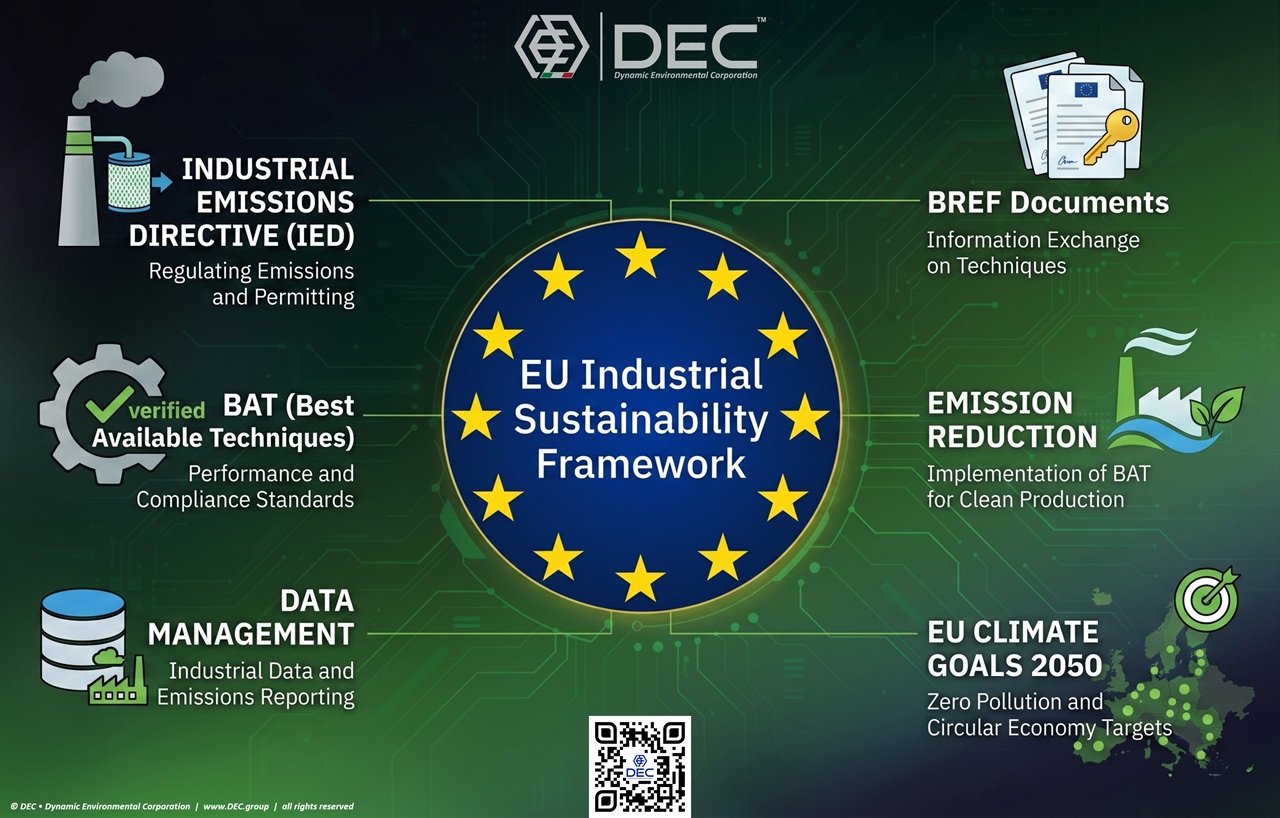
Industrial Emissions Directive (IED) • BAT • BREF
The European Industrial Emissions Directive (IED) establishes the regulatory framework for preventing and reducing industrial emissions through an integrated approach to pollution prevention and environmental protection. Industrial operators are required to implement the applicable Best Available Techniques (BAT) described in the relevant BAT Reference Documents (BREFs) published by the European Commission.
DEC Air Pollution Control technologies are engineered to support industrial operators in implementing these Best Available Techniques by combining high environmental performance, energy efficiency, operational reliability, sustainable engineering, and lifecycle optimization.
For a comprehensive explanation of the European regulatory framework, BAT Conclusions, BAT Reference Documents (BREFs), VOC emission control, and the role of Air Pollution Control technologies, please refer to our dedicated technical publication:
Industrial Emissions Directive (IED) • BAT • BREF • VOC Emission Control
DEC Air Pollution Control Technologies
DEC develops proprietary Air Pollution Control technologies supporting the implementation of Best Available Techniques across numerous industrial sectors. Our integrated solutions maximize VOC abatement, solvent recovery, energy efficiency, operational reliability, environmental sustainability, and circular economy principles.
- SRU™ – Solvent Recovery Units
- XTO™ – Thermal Oxidizers (RTO, DTO & CTO)
- XBC™ – VOC Concentration Systems
- XFU™ • Exhaust Filtering Units
- XSU™ • Dry & Wet Scrubbers
Environmental Performance
DEC Air Pollution Control systems are engineered to maximize environmental performance through the reduction of atmospheric emissions while optimizing energy consumption, solvent recovery, process efficiency, and operational reliability.
- Reduction of Volatile Organic Compound (VOC) emissions
- High solvent recovery efficiencies
- Reduction of greenhouse gas emissions through energy recovery
- Optimized thermal efficiency
- Reduced operating costs
- Improved resource efficiency
- Reduced environmental footprint
Energy Efficiency & Circular Economy
Modern BAT implementation extends beyond emission control by promoting energy efficiency, resource optimization, waste reduction, and circular economy principles. DEC technologies integrate solvent recovery, heat recovery, process optimization, advanced automation, and digital monitoring to improve overall plant sustainability while reducing environmental impacts.
Engineering According to BAT Principles
Every DEC Air Pollution Control system is engineered according to the specific industrial process, emission characteristics, applicable legislation, customer requirements, and relevant BAT Reference Documents. Engineering activities consider pollutant characteristics, flow rate, concentration, operating conditions, energy consumption, maintainability, lifecycle costs, future operational flexibility, and long-term sustainability.
- Process Engineering
- Environmental Engineering
- Mechanical Engineering
- Automation & Control Systems
- Energy Optimization
- Safety Engineering
- Emission Monitoring Integration
Compliance Documentation
DEC provides comprehensive engineering and technical documentation supporting environmental permitting, project execution, and regulatory compliance throughout the complete project lifecycle.
- Process Design Documentation
- Emission Calculations
- Mass & Energy Balances
- Performance Guarantees
- Equipment Specifications
- General Arrangement Drawings
- P&IDs
- Operation & Maintenance Manuals
- Environmental Performance Data
- Factory Acceptance Test (FAT) Documentation
Industries & Markets Served
DEC Air Pollution Control systems are installed worldwide across a broad range of industrial sectors where VOC abatement, solvent recovery, thermal oxidation, energy efficiency, and environmental protection are fundamental to safe, sustainable, and compliant manufacturing.
Discover our complete portfolio of industrial applications at Industries & Markets.
- Converting
- Flexible Packaging
- Solvent-Based Lamination
- Coating (Paper, Film, Foil & Tissue)
- Lacquering
- Nonwoven Hygiene Products (AHP)
- Publication Printing
- Tobacco Packaging
- Banknote & Security Printing
- Adhesive Tapes
- Paper Plasticization
- Wall Coverings
- Fine Chemicals
- Oil & Gas
- Pharmaceutical
- Electronics & Lithium-Ion Batteries
- Solar Panels
- Automotive
- Paper Mills
- Groundwater Treatment
- Rubber, Bitumen Covering & Degreasing
- Food Processing
- Energy Storage
- Aerospace & Aviation
- Expandable Polystyrene (EPS)
- Cosmetics, Beauty & Personal Care
European Environmental Compliance
Within the European regulatory framework, there is no general "Environmental Protection Facility Compliance Certificate" issued for Air Pollution Control systems. Environmental compliance is achieved through project-specific permitting, implementation of applicable legislation, and the application of the relevant Best Available Techniques (BAT) described in the corresponding BAT Reference Documents (BREFs).
DEC technologies are engineered to support industrial operators in achieving these environmental objectives through advanced Air Pollution Control solutions combining regulatory compliance, energy efficiency, operational reliability, process optimization, and long-term sustainability.
Why Choose DEC
For more than eighty years, DEC has been developing innovative Air Pollution Control technologies that help industries reduce emissions, recover valuable solvents, improve energy efficiency, and implement Best Available Techniques in accordance with the European Industrial Emissions Directive. By combining proprietary process technologies, advanced engineering, worldwide project experience, and comprehensive lifecycle services, DEC delivers sustainable environmental solutions that protect the environment while improving industrial productivity and profitability.
Ready to Start Your Project?
Contact Us
FAQs • Frequently Asked Questions
Air Pollution Control Systems | BAT Reference Documents (BREF) | Industrial Emissions Directive (IED) • DEC
What is the Industrial Emissions Directive (IED) and how does it relate to BAT and BREF?
The Industrial Emissions Directive (IED) is the EU regulatory framework for preventing and reducing industrial emissions through an integrated approach to pollution prevention. Under the IED, industrial operators must implement the applicable Best Available Techniques (BAT) described in the relevant BAT Reference Documents (BREFs) published by the European Commission for their specific sector.
What Air Pollution Control (APC) technologies does DEC offer to support BAT compliance?
DEC's Air Pollution Control portfolio includes SRU™ solvent recovery units, XTO™ thermal oxidizers (RTO, DTO & CTO), XBC™ VOC concentration systems, ADM™ air dehydration systems, DST™ distillation systems, ERS™ energy recovery solutions, AFO™ air flow optimization, TGS™ technical gas solutions, TSS™ technical support services, and BSM™ bulk specialty materials, all engineered to help industrial operators implement the Best Available Techniques required by the relevant BREF.
What environmental performance benefits do DEC Air Pollution Control systems provide?
DEC APC systems are engineered to reduce Volatile Organic Compound (VOC) emissions, achieve high solvent recovery efficiencies, lower greenhouse gas emissions through energy recovery, optimize thermal efficiency, reduce operating costs, improve resource efficiency, and reduce the overall environmental footprint of industrial facilities.
How does DEC engineer its systems according to BAT principles?
Every DEC Air Pollution Control system is engineered according to the specific industrial process, emission characteristics, applicable legislation, customer requirements, and relevant BAT Reference Documents, combining process engineering, environmental engineering, mechanical engineering, automation and control systems, energy optimization, safety engineering, and emission monitoring integration.
What compliance documentation does DEC provide for Air Pollution Control projects?
DEC provides comprehensive engineering and technical documentation supporting environmental permitting, project execution, and regulatory compliance, including process design documentation, emission calculations, mass and energy balances, performance guarantees, equipment specifications, general arrangement drawings, P&IDs, operation and maintenance manuals, environmental performance data, and Factory Acceptance Test (FAT) documentation.
Is pricing available for DEC Air Pollution Control systems, and can I purchase one directly?
DEC Air Pollution Control systems are custom-engineered per project, so there is no fixed list price. Each system is sized, designed, and priced once DEC's engineering team has reviewed the process emissions, applicable BAT Reference Document (BREF), and regulatory requirements of your project. Contact DEC's Technical Sales & Applications engineering team to request a quote.