Advancing VOC Emission Control in Adhesive Tapes industries
Best Practices and Environmental Considerations
The Adhesive Tapes industry is the sector of the economy that manufactures and distributes adhesive tapes. Adhesive tapes are used in a wide variety of applications, including: packaging, electrical and electronics, building and construction, automotive and transportation, consumer goods, healthcare, industrial. The adhesive tapes industry is a competitive, dynamic and growing market. The continued growth of the market is expected to be driven by the increasing demand for innovative and high-performance solvent based adhesive tapes.
Volatile Organic Compounds (VOCs) are emitted from a variety of industrial sources, including Adhesive Tapes industries. VOCs are a major source of air pollution, contributing to air pollution, smog, and ground-level ozone formation. VOC emissions also show harmful effects on human health, causing respiratory problems and other health effects.
VOC emission control is mandatory in several countries, with specific limits at the stack of every industry. In this document we will cover the specific needs and solutions for the Adhesive Tapes sector.
The Industrial Emissions Directive (IED) is a European Union directive that sets limits on VOC emissions from industrial processes. The IED includes a Best Available Techniques (BAT) Reference Document (BREF) for the Adhesive Tapes sector, which outlines the best practices for controlling VOCs.
The US Clean Air Act (CAA) is a federal law that regulates air pollution in the United States. The CAA includes a number of provisions that address VOC emissions.
There are a number of VOC emission control technologies that can be used in Adhesive Tapes manufacturing, to comply with environmental regulations.
The most performing technologies include:
SRU™ • solvent recovery units
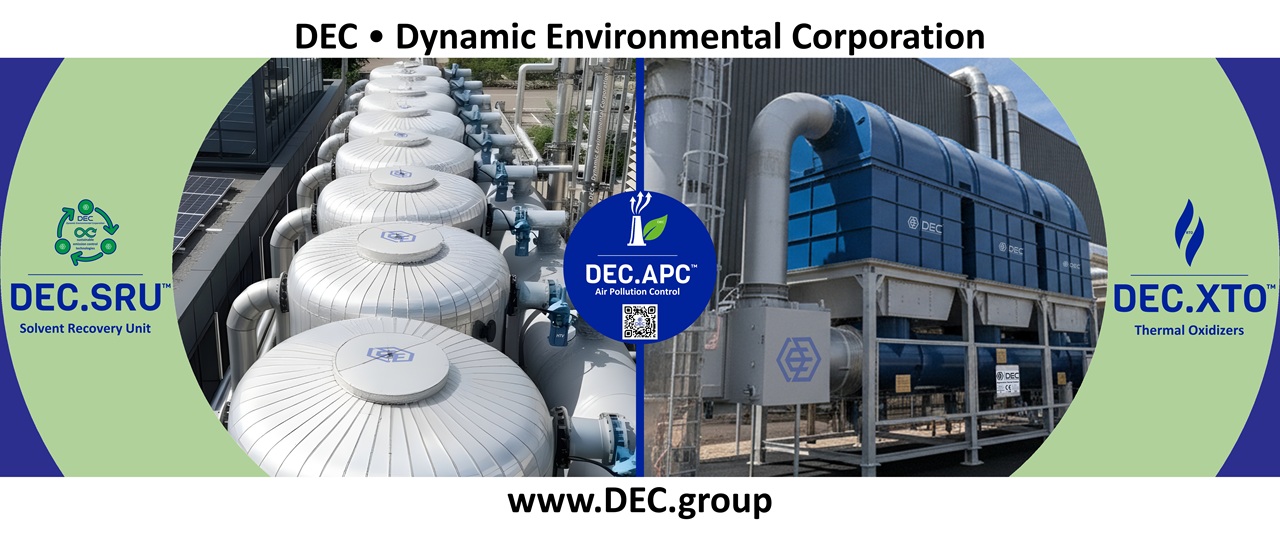
SRU, Solvent Recovery Unit (also known as SRP, Solvent Recovery Plant) is a gas phase VOC adsorption system, based on activated carbon, complete of onsite desorption technology, typically employed as VOC Emission Control, allowing to respect VOC emission limits with a typical efficiency up to 99%, while recovering the solvents for direct reuse, at a fraction of their purchase cost, generating a very interesting ROI (a sustainable technology and a true path to decarbonization). They can cover from small to large SLA (solvent laden air) volumes and deal with a wide variety of VOCs, including water-miscible, non-water-miscible solvents.
XTO™ • thermal oxidizers
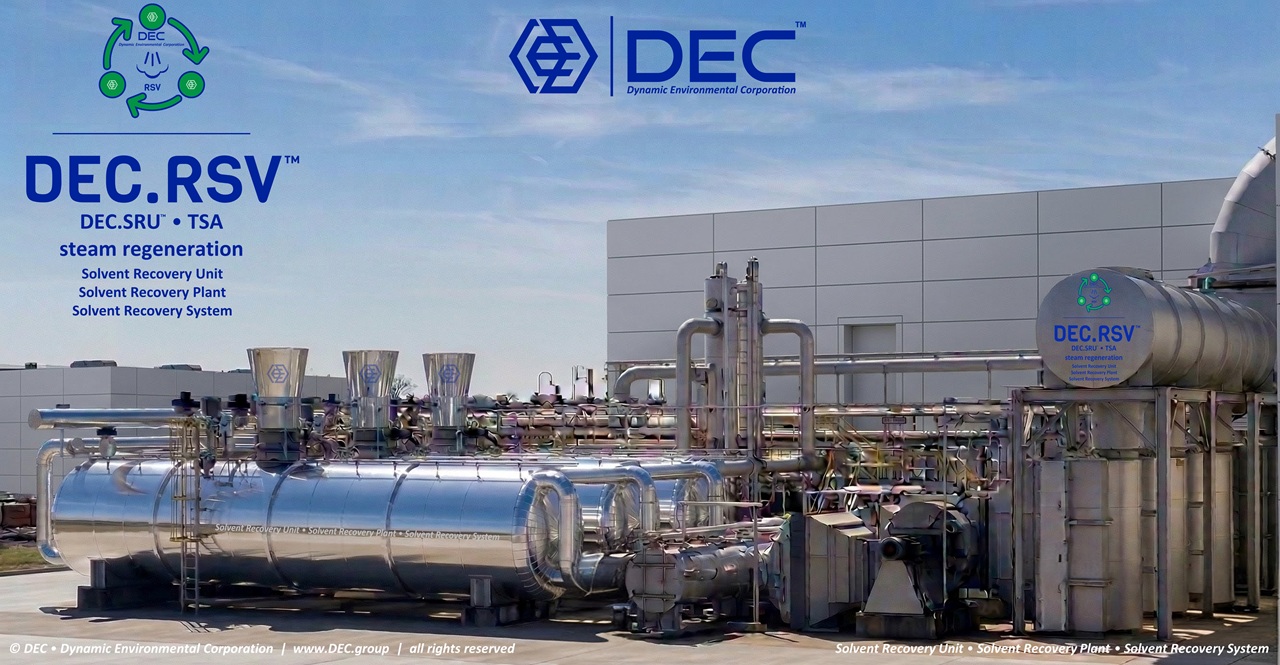
RTO, Regenerative Thermal Oxidation works by burning VOCs at high temperatures in a closed combustion chamber: through the oxidation reaction VOCs are converted to GHG (green house gasses, CO2, NOX, CO, and H2O). The heat generated during the combustion process is then captured and used to preheat incoming air (SLA, solvent-laden air), which in turn reduces fuel consumption and enhances energy efficiency compared to traditional thermal oxidation methods. The multi-tower design of RTO allows for continuous operation. Please note that catalytic oxidation is generally not applicable in Adhesive Tapes, being the catalyst may be poisoned by some chemicals in the VOC emissions, which can make it quickly ineffective. Please note that catalytic oxidation is generally not applicable in Adhesive Tapes, being the catalyst could be poisoned by some compounds in the chemicals (e g. inks, varnishes, lacquers, adhesives, etc), which can make it quickly ineffective. Any thermal oxidation processes will dramatically contribute to increasing your GHG (green house gasses) emissions and your fuel consumptions.
conclusions
Selecting a VOC emission control technology that is appropriate for your specific needs and that will help you to comply with VOC emission regulations while minimizing the overall environmental impact (as VOCs and GHGs), avoiding any form of greenwashing. You have to consider different factors, including the type of VOCs being emitted (type of solvents used), the size of the facility (quantity of solvents used per year), the area available for the installation and the budget (CAPEX) constraints for the selected VOC abatement system.
However, even if all of the VOC Emission Control Technologies listed above are effective in complying with VOC regulations, only SRU, solvent recovery unit technology is aligning with both environmental compliance requirements and environmental responsibility. SRU, solvent recovery units offer a sustainable and efficient solution for DECarbonization and circular economy implementation. By capturing and reusing solvents that would otherwise be wasted, these VOC emission control systems not only reduce the environmental impact of the Adhesive Tapes industries but also contribute to cost savings (ROI) and regulatory compliance. Compared to thermal oxidation systems, solvent recovery units demonstrate superior energy efficiency, reduced GHG emissions, versatility, and a commitment to long-term sustainability (reduced resource consumption). Embracing such innovative technologies is crucial for industries to meet their environmental goals, drive sustainability (economic growth and environmental stewardship), and pave the way for a greener future.
Ready to Start Your Project?
Contact Us
FAQs • Frequently Asked Questions
♻️ VOC Emission Control for Adhesive Tapes industries ♻️
What are the main VOC emission control technologies for the Adhesive Tapes industry?
The two leading technologies are Solvent Recovery Units (SRU), which use activated-carbon adsorption to capture and recover solvents for reuse, and thermal oxidizers (XTO/RTO), which destroy VOCs by combustion. SRU is the only technology that combines regulatory compliance with solvent reuse and a measurable ROI, while thermal oxidation only destroys VOCs and increases GHG emissions and fuel consumption.
What is a Solvent Recovery Unit (SRU) and how does it work in Adhesive Tapes manufacturing?
An SRU (also called SRP, Solvent Recovery Plant) is a gas-phase VOC adsorption system based on activated carbon with onsite desorption technology. It captures VOCs from solvent-laden air (SLA) with up to 99% efficiency and recovers the solvents for direct reuse at a fraction of their purchase cost, generating a strong ROI. It handles both water-miscible and non-water-miscible solvents, from small to large SLA volumes, making it suitable for the coating and lacquering processes typical of adhesive tape production.
Why is catalytic oxidation generally not suitable for VOC control in Adhesive Tapes production?
Catalytic oxidation (CTO) is generally not applicable in the Adhesive Tapes industry because the catalyst can be poisoned by compounds found in inks, varnishes, lacquers, and adhesives, which quickly makes it ineffective. Regenerative thermal oxidation (RTO) is used instead when a destruction-based technology is chosen, though it converts VOCs into GHGs (CO2, NOX, CO, H2O) rather than recovering them.
Which regulations govern VOC emissions from Adhesive Tapes manufacturing?
In the EU, the Industrial Emissions Directive (IED) sets VOC emission limits and includes a Best Available Techniques (BAT) Reference Document (BREF) for the Adhesive Tapes sector. In the US, the Clean Air Act (CAA) regulates VOC emissions from industrial processes. Both frameworks require facilities to select abatement technologies that meet defined emission limits at the stack.
How do I choose between an SRU and an XTO/RTO for VOC abatement in Adhesive Tapes manufacturing?
The right choice depends on the type and concentration of solvents used, the size of the facility (solvent throughput per year), the area available for installation, and CAPEX/OPEX budget constraints. SRU is generally preferred when solvent recovery, ROI, and lower GHG emissions are priorities, while RTO may suit facilities without a solvent-recovery strategy, though it does not recover any solvent value and increases fuel consumption.
What sustainability and ROI benefits does solvent recovery offer over thermal oxidation?
By capturing and reusing solvents instead of destroying them, Solvent Recovery Units cut raw-material costs and deliver a measurable return on investment. Compared with thermal oxidation, SRU technology also offers superior energy efficiency, reduced GHG emissions, and supports decarbonization and circular-economy goals, rather than simply converting VOCs into CO2, NOX, CO, and water vapor.
Which industries and applications does the Adhesive Tapes sector serve?
Adhesive tapes are used across a wide variety of applications, including packaging, electrical and electronics, building and construction, automotive and transportation, consumer goods, healthcare, and industrial uses. Growing demand for innovative, high-performance solvent-based adhesive tapes across these markets is driving the need for effective, compliant VOC emission control at manufacturing sites.